O‘ahu Fresh

  • Sign Up
  • This Week’s Newsletter
  • Member Login
  • How It Works
    • Produce Bag Options
    • Delivery Areas
    • Online Marketplace
    • Wholesale
    • FAQs
    • Gift Certificates
  • Producers
  • This Week’s Bag
    • Cooking In Quarantine
    • Recipes
    • Ingredients
    • Latest Newsletter
  • About Us
    • Oahu Food Hub
  • Local Agriculture
    • Resources for Farmers
    • Hawaii Food & Farmers Series

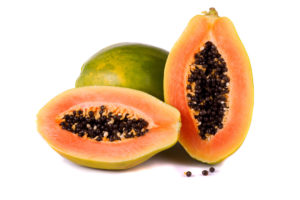
Papaya

papaya (1)

Papaya is native to the tropics of the Americas in the regions of southern Mexico and Central America. The papaya is a tree-like plant that can grow over 30 feet tall. The fruit is a type of berry and when ripe it feels soft and the skin turns an amber to orange hue.

Papaya plants grow in three sexes: male, female, and hermaphrodite. The male produces only pollen, never fruit. The female will produce small, inedible fruits unless pollinated. The hermaphrodite can self-pollinate because its flowers contain both male stamens and female ovaries. As a result almost all commercial papaya orchards contain only hermaphrodite papaya plants.

In 1998, in response to the papaya ringspot virus (PRV) outbreak in Hawaii, genetically altered papaya were approved and brought to market (including ‘SunUp’ and ‘Rainbow’ varieties.) Varieties resistant to PRV have some DNA of this virus incorporated into the DNA of the plant.

Preparation:

Papayas are often eaten raw. To ripen papayas, store at room temperature in a loosely closed paper bag. Ripe fruit has more yellow than green coloring and yields to gentle pressure. The fruit is cut in half and the seeds removed. The flesh can be scooped out or cut into wedges. Cover and refrigerate ripe fruit for up to a week.

Papaya seeds are edible, but quite bitter, pepper and reminiscent of horseradish. Save them to use in your next papaya seed dressing!
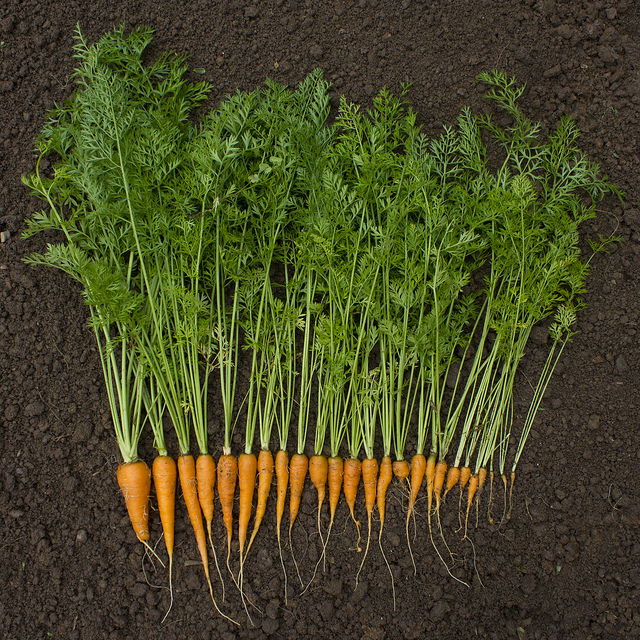
Mixed Carrots


Oh how we love carrots!  They are a funny little root crop so that you never know what you’re going to get until you pull them out of the ground!  Usually orange in color, but sometimes they can be cosmic and come out purple, yellow, red or even white.  Packed with health-promoting beta carotene, they promote good vision, especially night vision, and help combat health-damaging free radical activity.

Preparation

Since carrots are root crops, make sure you scrub them well to get an residual dirt off of them.  Peeling off the skin is optional, I usually don’t because I’m lazy like that.  Grab a knife and chop away!  Or you can be more fancy pants like this guy!

Farms that grow carrots

  • Twinbridge Farms
  • Kahumana Farm
  • Keiki and Plow

Recipes

Carrot Nut Muffins 

Fennel

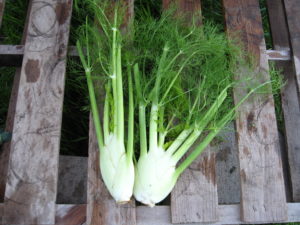
Fennel

Fennel is a hardy, perennial herb with yellow flowers and feathery leaves. It is indigenous to the shores of the Mediterranean but has become widely naturalized in many parts of the world.  It is a highly aromatic and flavorful herb with culinary and medicinal uses and, along with the similar-tasting anise, is one of the primary ingredients of absinthe.

The bulb, foliage, and seeds of the fennel plant are widely used in many of the culinary traditions of the world.  The leaves are delicately flavored and similar in shape to those of dill.  Young tender leaves are used for garnishes, as a salad, to add flavor to salads, to flavor sauces, and also in soups and fish sauce.  The bulb is a crisp vegetable that can be sautéed, stewed, braised, grilled, or eaten raw.

Jen Reviews shares some of the many health benefits of fennel.

Preparation

The NY Times breaks down fennel prep.

Farms that Grow Fennel

  • Kahumana Organic Farm

Recipes

  • Creamy Fennel and Greens Soup
  • Fennel and fish go great together! Whether you’re grilling, poaching, or steaming, laying a few stalks and fronds alongside the fish will infuse the fish with sweet fennel flavor.

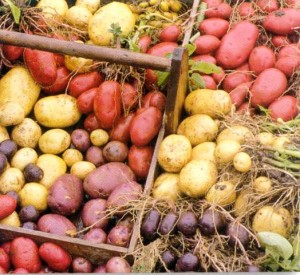
Mixed Potatoes

potatoesmixed

What we know as the potato is the edible tuber of a plant that is part of the nightshade family.  All potatoes can be traced genetically to a single origin – a region of the Andes that is part of both Peru and the very north of Bolivia.  Potatoes are the world’s fourth largest crop after rice, wheat and maize. There are over 4,000 varieties of potato and they are categorized into main groups: russets, whites, yellows (Yukons) and purples.

Preparation

Only the cooked tuber of this plant is edible as the leaves, flowers and fruit of the potato plant are highly toxic.  Nutritionally, it is said that a human can live on diet of potatoes with only the addition of milk or butter (or any sources of vitamins A and D, the only two vitamins a potato lacks).  Also, it contains minerals, fiber and of course carbohydrates.

– Always wash your potatoes well before cooking.

– Its a good idea to take a paring or any small fruit knife and carefully remove any “eyes” or bruises or cuts you see.  The eyes are simply spots where the potato decided it might sprout a leaf, and sometimes the eyes can have a fibrous feel and bitter taste.  Then peel or leave skin on if you want.

– Potatoes can be cooked and enjoyed every which way:  boiled, fried, steamed, baked, roasted, mashed.

Recipes

  • Dijon and Dill Potato Salad
  • Smashed Red Potatoes with Garlic and Herb


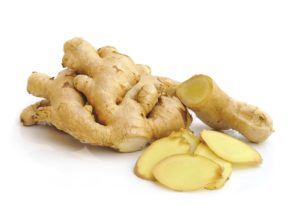
Ginger

Aromatic, pungent and spicy, what we know as ginger is the root of the plant officially known as Zingiber official.  Ginger is widely used as a spice or a medicine.  Historically, ginger has a long tradition of being very effective in alleviating symptoms of gastrointestinal distress.  Modern scientific research has revealed that ginger possesses numerous therapeutic properties including antioxidant effects, an ability to inhibit the formation of inflammatory compounds, and direct anti-inflammatory effects.

Preparation

To remove the skin from fresh mature ginger, peel with a paring knife. The ginger can then be sliced, minced or julienned. The taste that ginger imparts to a dish depends upon when it is added during the cooking process. Added at the beginning, it will lend a subtler flavor while added near the end, it will deliver a more pungent taste.

Farmers that grow Ginger

  • Pacific Gateway Center

Recipes

  • Tom Kha Soup
  • « Previous Page
  • 1
  • …
  • 24
  • 25
  • 26
  • 27
  • 28
  • Next Page »
  • Sign Up
  • This Week’s Newsletter
  • Member Login

Our Mission

Oahu Fresh provides access to food from local farms for homes, offices, restaurants, hotels, and schools throughout Hawaii. As an avid participant in the CSA Hawaii program, we take pride in delivering freshly grown produce to you.

Members

  • Place Your Weekly Order
  • Become A Member
  • Policies & Procedures
  • FAQs

Weekly Newsletter

Be the first to hear what's in each week's delivery. Learn what's new in local food.

OAHU FRESH

916 Kaaahi Place
Honolulu, HI 96817
(808) 476-7550
support@oahufresh.com
Contact Us

Customer Service Hours:                                      Mon – Fri | 9:00AM  – 5:00PM

  • Facebook
  • Instagram
  • Twitter

© 2025 Oahu Fresh | Design by Local Color Design