O‘ahu Fresh

  • Sign Up
  • This Week’s Newsletter
  • Member Login
  • How It Works
    • Produce Bag Options
    • Delivery Areas
    • Online Marketplace
    • Wholesale
    • FAQs
    • Gift Certificates
  • Producers
  • This Week’s Bag
    • Cooking In Quarantine
    • Recipes
    • Ingredients
    • Latest Newsletter
  • About Us
    • Oahu Food Hub
  • Local Agriculture
    • Resources for Farmers
    • Hawaii Food & Farmers Series

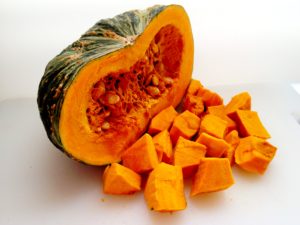
Kabocha


Kabocha is a variety of winter squash, often referred to as a Japanese pumpkin. It’s sometimes described as a cross between sweet potato and pumpkin in flavor and texture. It’s sweet taste, velvety texture, massive offering of nutritional benefit and versatility, make it a prized staple vegetable in Japan. You can substitute it within recipes that call for acorn and butternut squash or pumpkin. Most forward nutritients are beta carotene, vitamin C, iron, and potassium with smaller amounts of B vitamins, folic acid and calcium.

How to select a Kabocha:

The two things to look for are weight and color. Skin should be a rich, deep green and it should feel heavier than expected. Ripeness is indicated by golden speckling and stripes on the exterior.

How to prepare Kabocha:

Carefully slice the entire squash in half, keeping in mind that it’s dense and might be difficult to cut. Like other squashes, you’ll want to scoop out the pulp and seeds, leaving the meat behind. From here you can slice it into wedges for roasting, simmering, pureing, or baking. You can also grate it to add texture to breads or other baked dishes and desserts. The skin is ok to leave on.
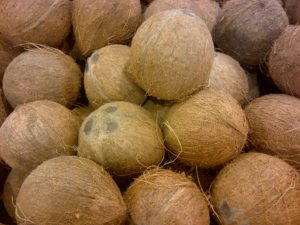
Husked Coconut

The mature, brown husked coconut is the third stage of maturation, and offers a nutty, sweet flavor. The fresh meat of the coconut offers iron, potassium, protein, fiber, other various minerals and contains saturated fats. Coconut helps keep you feeling full between meals without carrying too much caloric value, and helps regular blood pressure and keep sodium levels in check.

Selection

Indicators of a good coconut are not always reliable, but in general these are some things you should  The eyes, or indents should be uniformly brown and firm. The coconut should be heavy for their size and have a distinct sloshing sound, indicating it has good amount of juice internally. Husk should be dry and without mold.

Preparation

For ease in opening, puncture the eyes of the coconut with a screwdriver and drain the juice. Then heat the coconut under hot running water or place in a 375 degree oven for 20 minutes. Fault lines will appear on the warmed coconut. Hold the hot coconut in a cloth and place over a large bowl. Hit the fault lines with a hammer or mallet. Save the liquid, remove the meat, and peel off brown outer pieces with a small knife. To prepare thick coconut milk, wrap grated coconut in cheesecloth and place over a bowl. Pour one-half cup warm water over and squeeze liquid into the bowl. This can be done multiple times resulting in different thickness for the milk/cream. Use the milk and meat in fruit salads, puddings, cakes, cookies, custards, pies and other baked goods. Tint grated coconut with food coloring to make a colorful sweet topping. To store, whole coconuts will keep at room temperature for two weeks. For longer storage, refrigerate. Grated coconut will keep two weeks refrigerated in a glass jar. Place a whole hot chile in with the coconut to keep it from going bad. The outer shell, or husk, of the coconut can be use used as a starter for charcoal when grilling. Source: Specialty Produce.

Blue Lake Beans

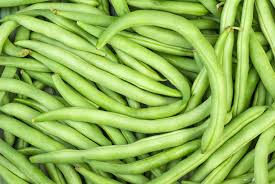
The beauty of the heirloom Blue Lake Bean is in it’s stringless-ness and flavor. It’s a snap variety that grows easily and offers “superior” flavor, color and texture. They are long and straight in shape and do not need stalking to grow. They were originally developed to be a canning bean but have come to be enjoyed fresh as well. They’re a great source of natural carbohydrate delivered along with vitamin A, C, K, folate, and manganese. Along with many other green beans, they’re considered helpful for cardiovascular health, colon-health and offer strong anti-inflammatory support.

Preparation

Always wash fresh produce using cold running water. They’re great served steamed or fresh in salads, ether whole or sliced. You can also boil them in salted water until crisp, 4-5 minutes, then rinse with cold water. You can also sauté them in butter or oil with other vegetables. They’re also perfect for quick pickling or canning, and pair well with fresh herbs, citrus, nuts, raisins, lemon, hard cheeses, tomato and summer squash.

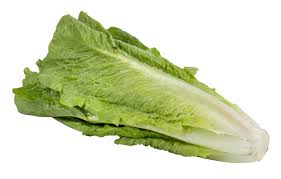
Romaine Lettuce

Romaine lettuce is type of lettuce that grows long sturdy leaves with strong ribs. It is more nutritious than iceberg lettuce, and unlike other types, can hold it’s own to heat, so it’s an easier lettuce to serve warm, braised or in soup. It’s most common use is in the classic Ceasar Salad, which might be inspired by it’s history in the Italian city Rome, from which it is said to have spread into the West. It’s also commonly used in Middle Eastern cuisine. It contains antioxidants considered protective against cancer.

Preparation

Always wash fresh produce thoroughly using cold water. For lettuce, it is best to wash each individual leaf. Discard any bruised or discolored leaves. FOr use in salad, dry leafs and chop leaves into medium size pieces as desired, discarding the core and leafless part of the stem. To prevent browning on edges of leaves, you can also tear it rather than cut it. Wait to toss with dressing until ready to serve.

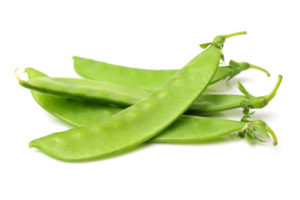
Snow Peas

Snow Peas (not to be confused with snap peas) are a garden fresh variety of pea, meaning you can eat it uncooked while still in the pod. Most often they’re removed from the garden while still unripe, leaving then crunchy but still tender. Eaten raw, they’re a great high-protein snack. They’re packed with Vitamin A, and C, potassium, dietary fiber, iron, magnesium, folic acid and small levels of healthy fats. Best part? They’re only a little over 1 calorie PER POD and have essentially no cholesterol! They’re a great natural food medicine to help with a number of health conditions, as well as general immune system boosting, digestion, bone mineral density and weight loss.

Preparation

Wash thoroughly, as with all produce. Snow Peas can be eaten raw. You can also cook in the shell or shell the peas, by simply frying them in a pan with oil and seasoning. Even while cooked lightly, they retain most of their nutritional value.

Farms that grow green onion

  • Ho Farms


  • « Previous Page
  • 1
  • …
  • 8
  • 9
  • 10
  • 11
  • 12
  • …
  • 29
  • Next Page »
  • Sign Up
  • This Week’s Newsletter
  • Member Login

Our Mission

Oahu Fresh provides access to food from local farms for homes, offices, restaurants, hotels, and schools throughout Hawaii. As an avid participant in the CSA Hawaii program, we take pride in delivering freshly grown produce to you.

Members

  • Place Your Weekly Order
  • Become A Member
  • Policies & Procedures
  • FAQs

Weekly Newsletter

Be the first to hear what's in each week's delivery. Learn what's new in local food.

OAHU FRESH

916 Kaaahi Place
Honolulu, HI 96817
(808) 476-7550
support@oahufresh.com
Contact Us

Customer Service Hours:                                      Mon – Fri | 9:00AM  – 5:00PM

  • Facebook
  • Instagram
  • Twitter

© 2026 Oahu Fresh | Design by Local Color Design